 Samui
Samui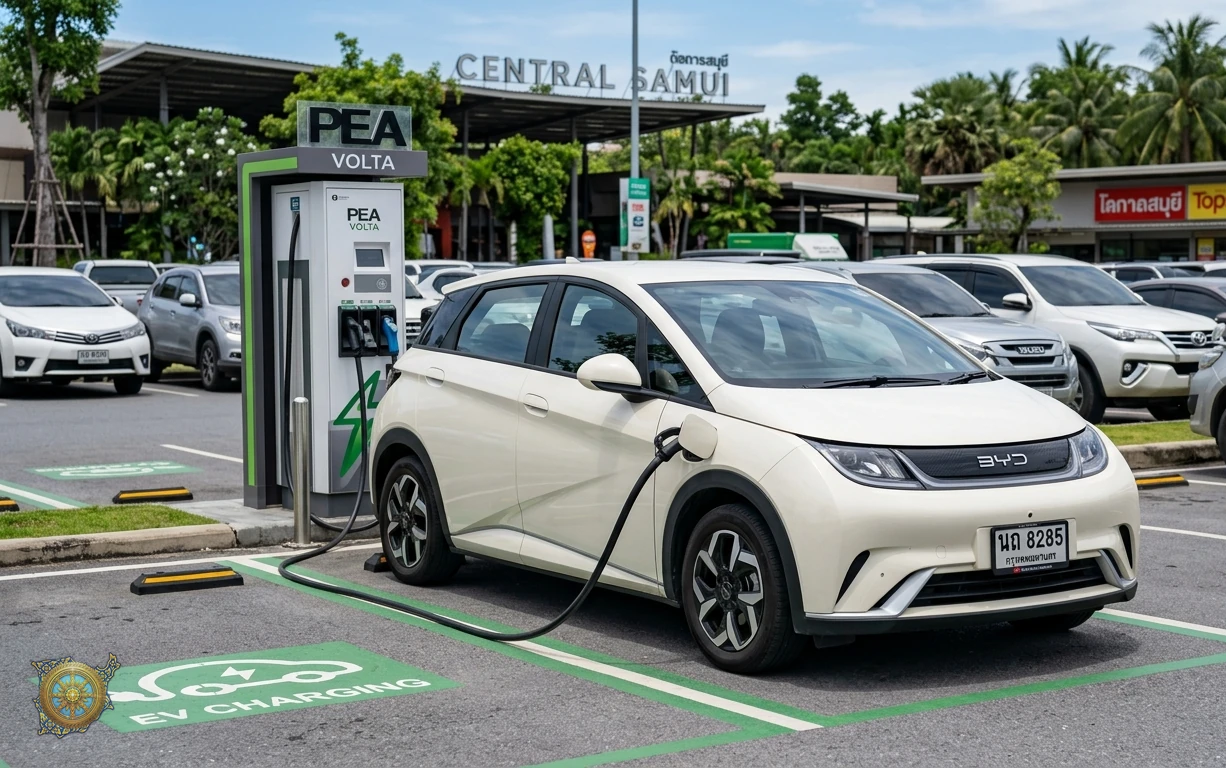
from ฿1,100 / day
Electric Hatchback
BYD Dolphin
- 5 seats
Samui Cars rents electric cars across Koh Samui from ฿850 a day, delivered fully charged to your hotel, villa or the airport. The island is 51 km around, which means almost any modern EV covers several days of sightseeing on one charge - and this page tells you exactly where to plug in when you do need to. The terms match the rest of our fleet: comprehensive insurance, unlimited mileage, free delivery and collection, no cleaning fee for ordinary beach use, and a deposit stated before you book and refunded within three bank days. State of charge and odometer are photographed at both ends of the rental, so nothing about the settlement is left to memory.
Rates shown are the average day rate. Each model page publishes the full low- and high-season day, week and month rates, the deposit and the full specification.
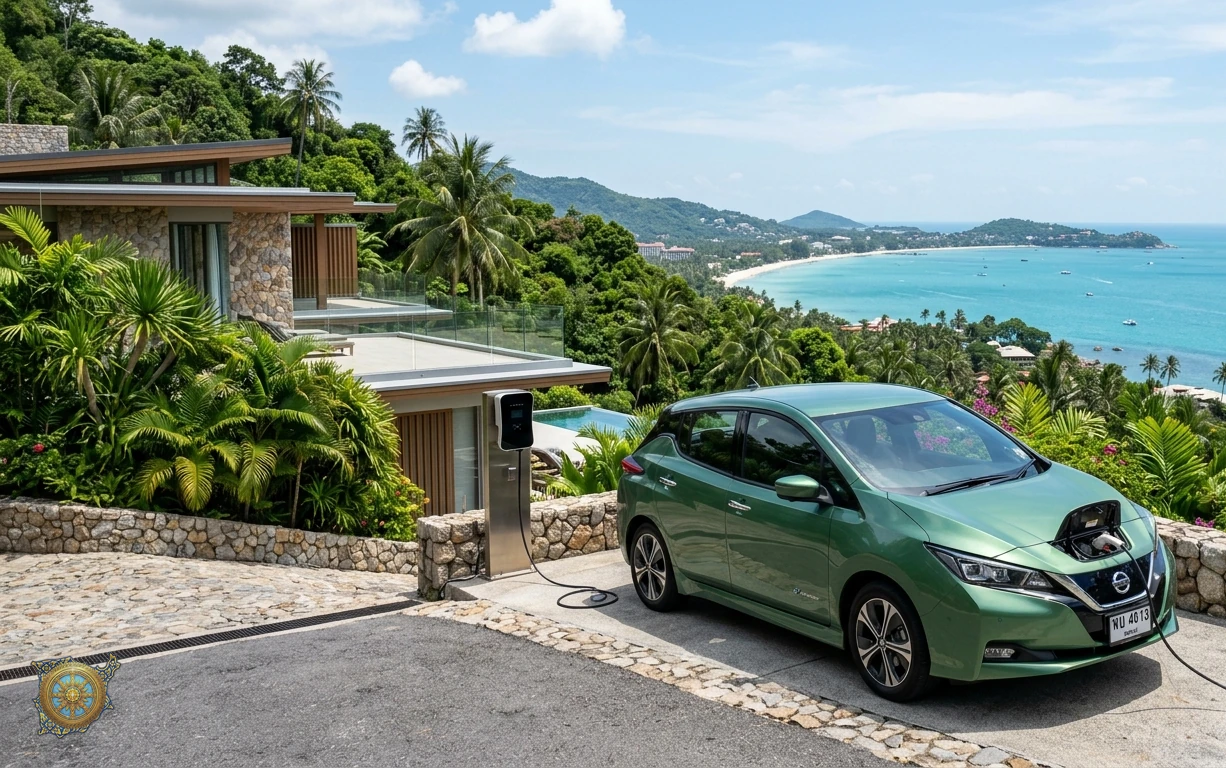
Electric hatchbacks are the cheapest EVs on Koh Samui and, for most visitors, the most sensible. With 300-400 km of real range against a 51 km ring road, you will charge roughly twice a week however hard you sightsee.
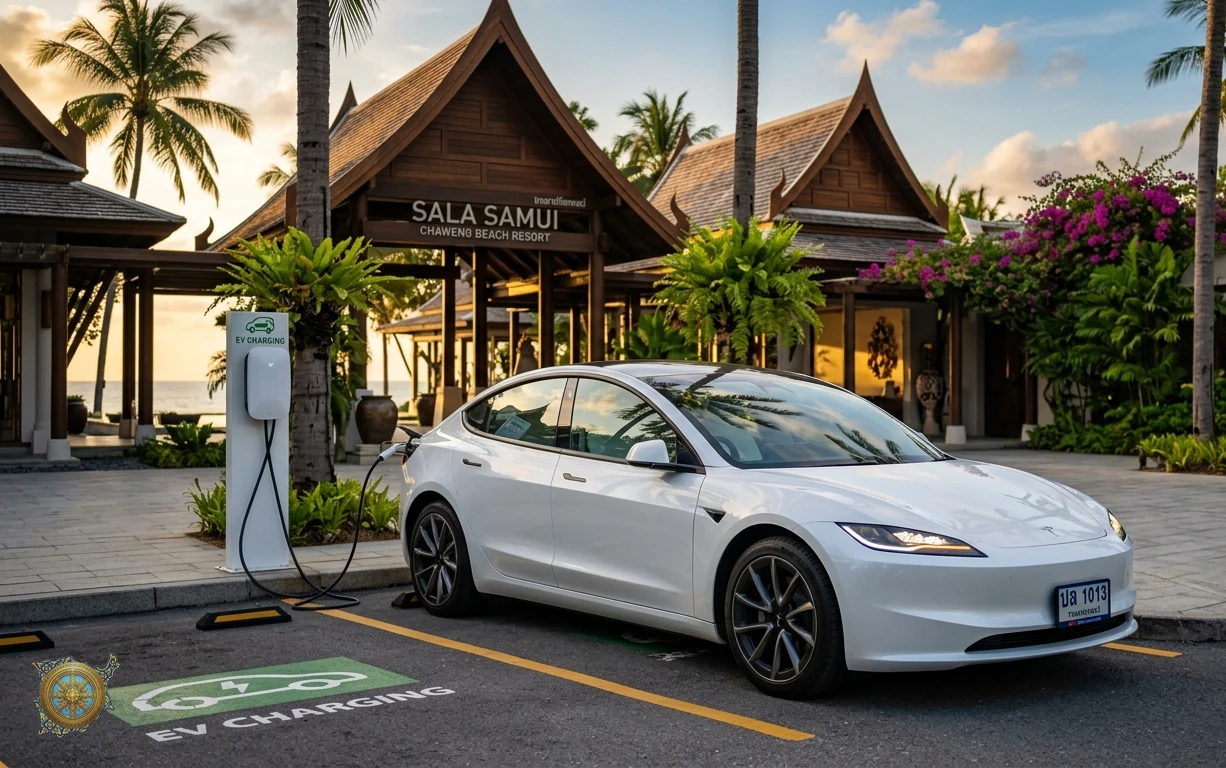
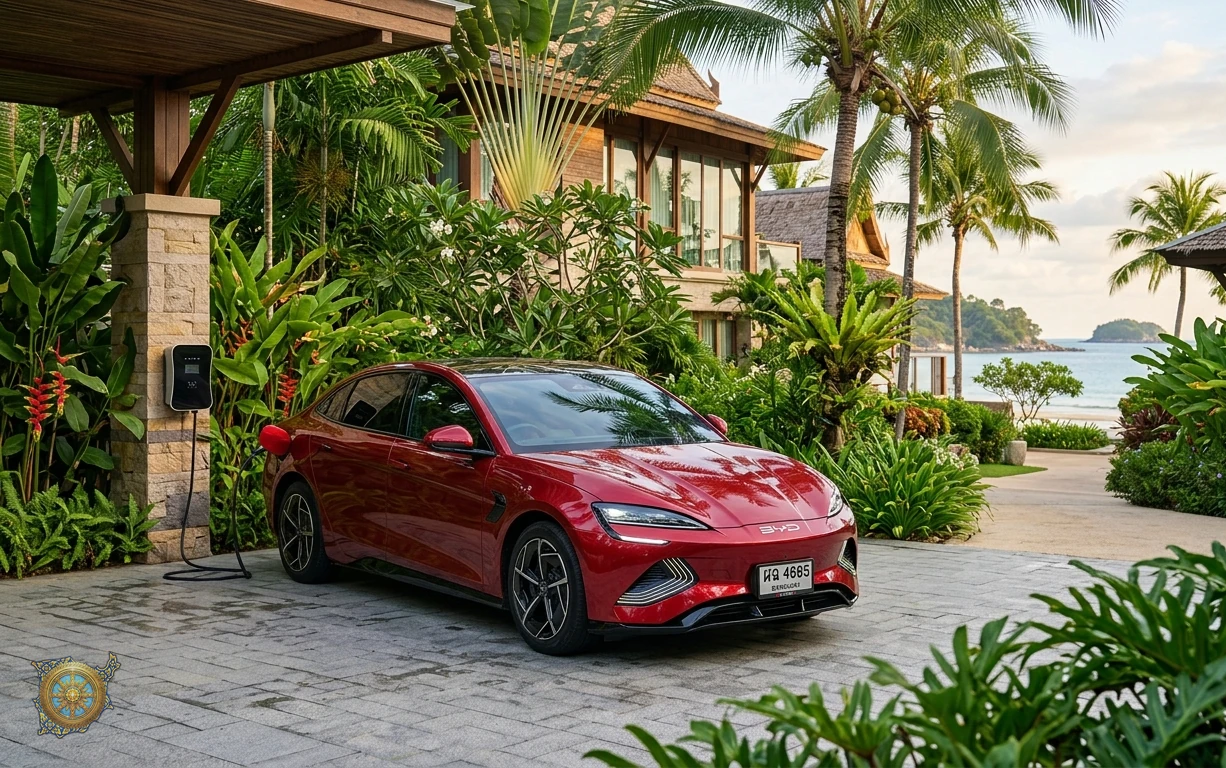
The electric sedans are the long-range, quick-charging end of the fleet. Every car in this group will cover the whole island for most of a week on one charge, and all of them add 200 km or more in twenty minutes on a DC charger.
from ฿1,850 / day
from ฿1,700 / day
from ฿1,450 / day
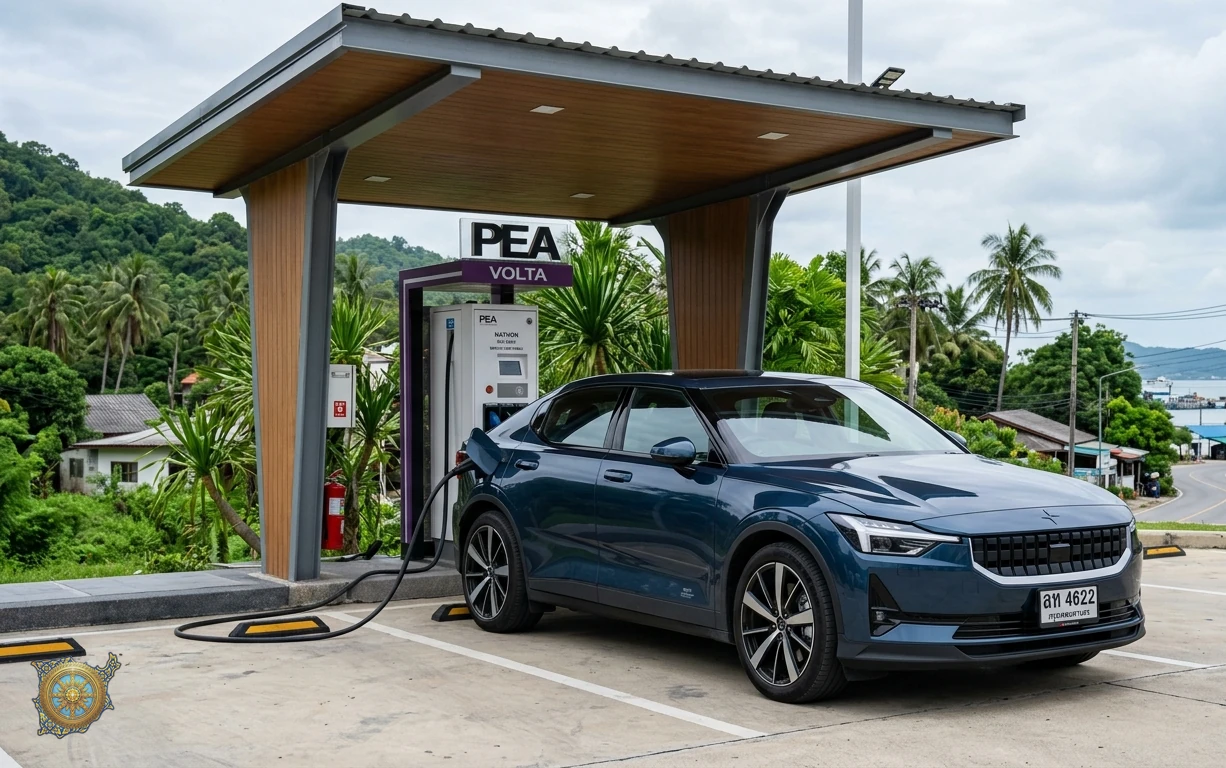
from ฿1,550 / day
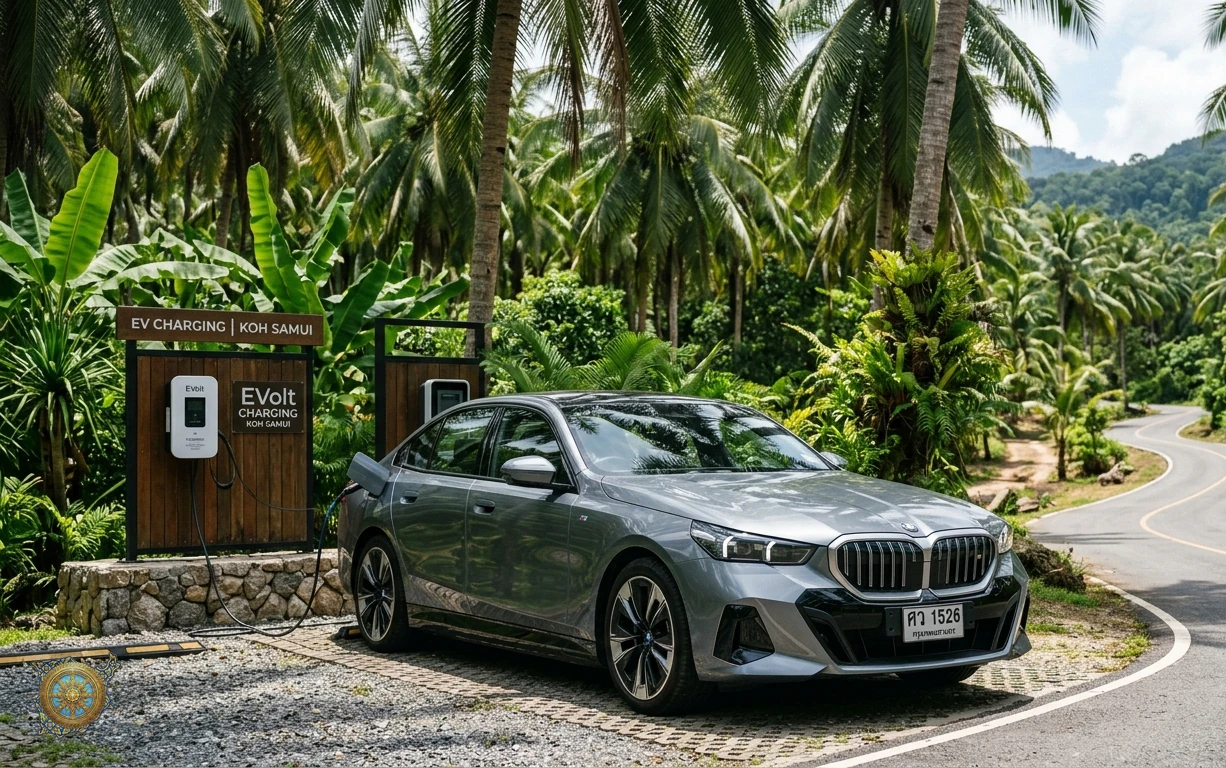
from ฿2,200 / day
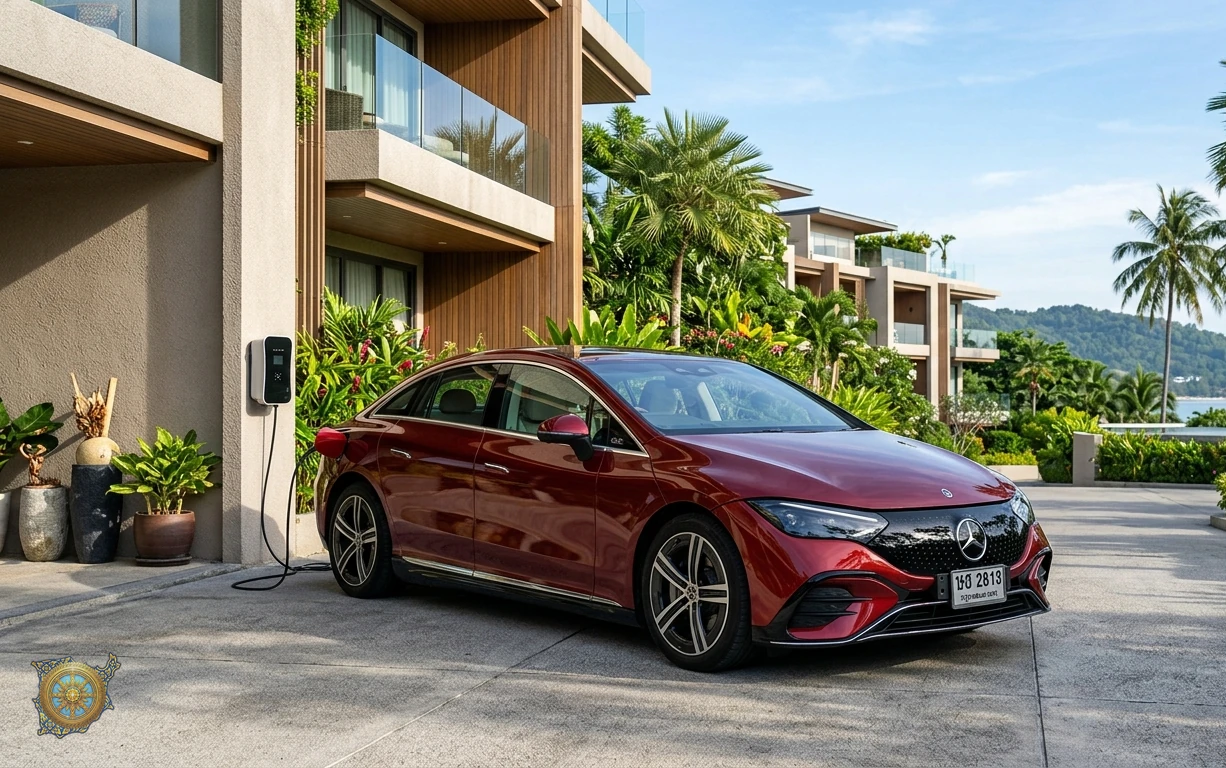
from ฿2,350 / day
The compact end of the electric fleet: raised, car-sized EVs with enough ground clearance for Samui's hill roads and none of the bulk that makes Chaweng Beach Road awkward. Rates run from ฿1,100 a day for the MG ZS EV to ฿2,100 for a high-season Kia EV6.
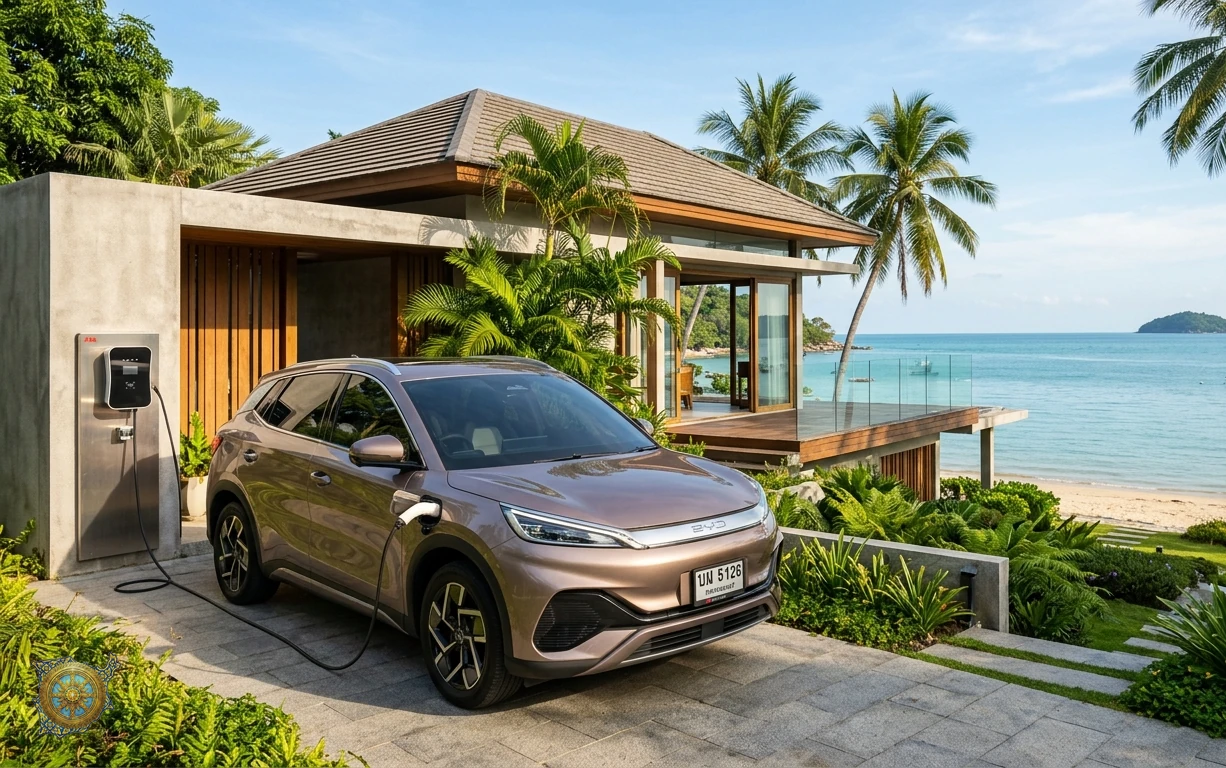
from ฿1,500 / day
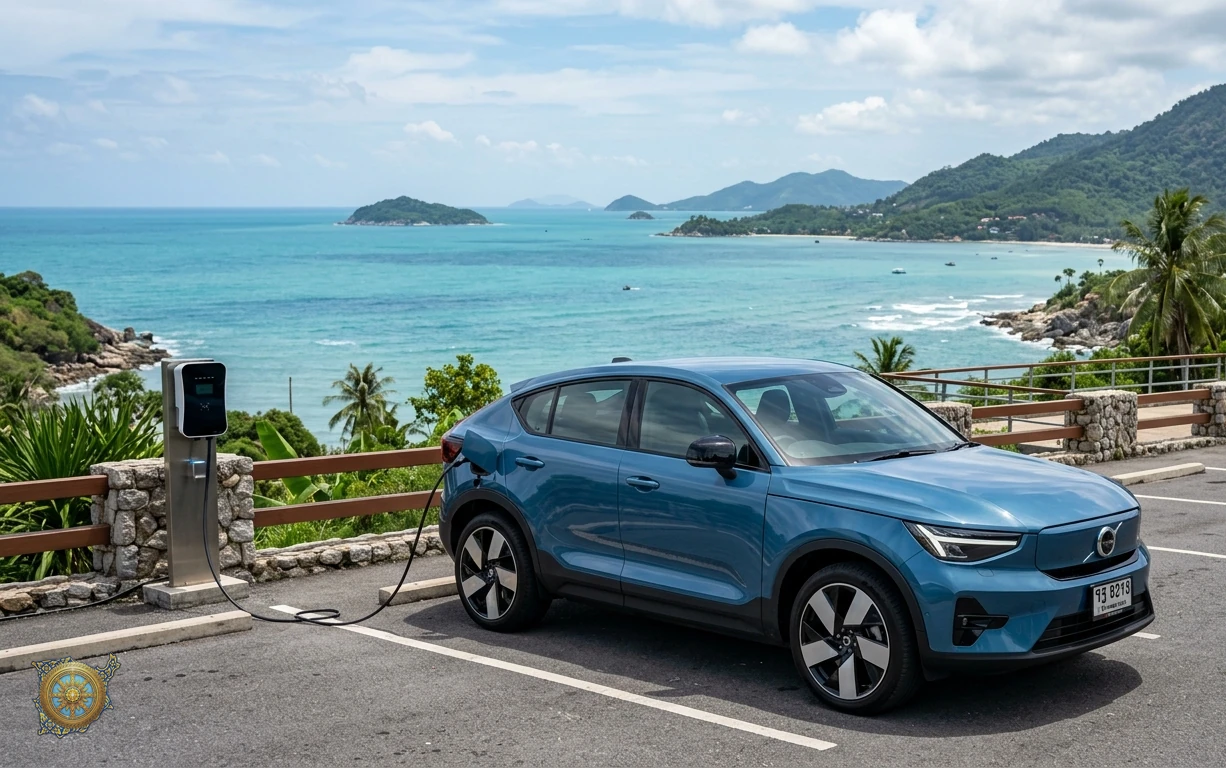
from ฿1,550 / day
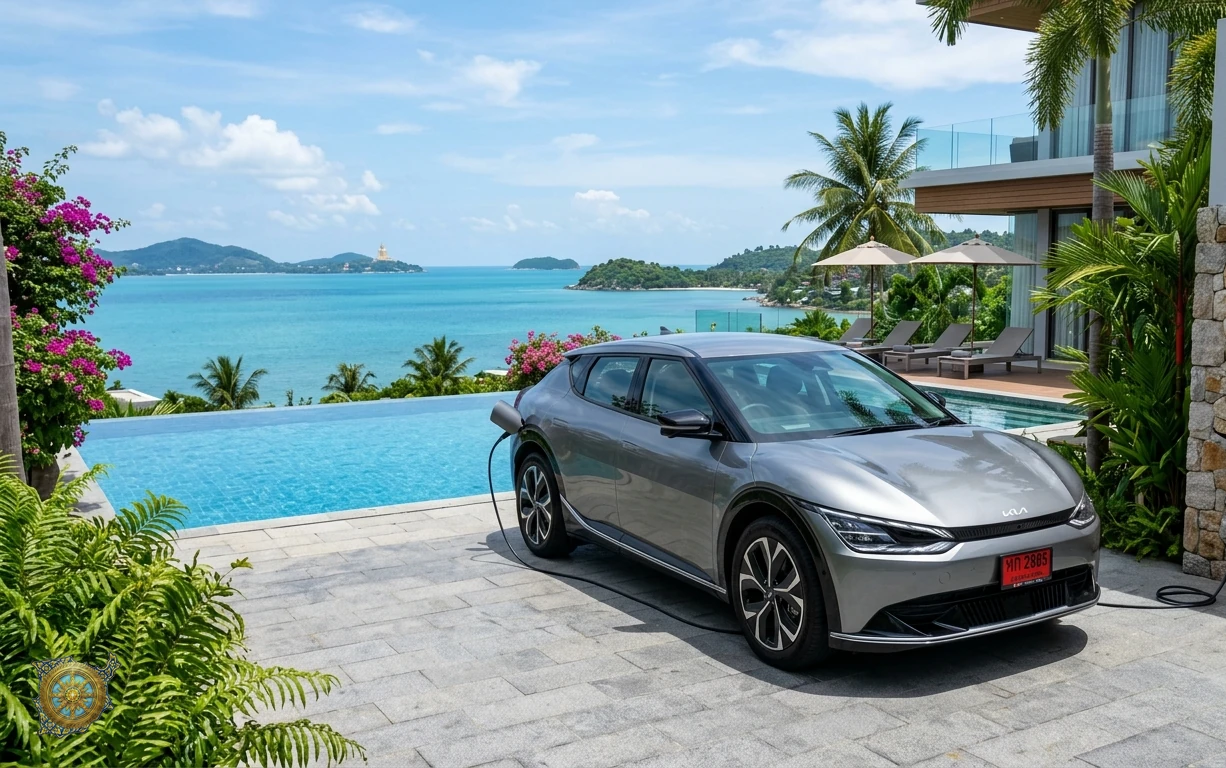
from ฿1,800 / day
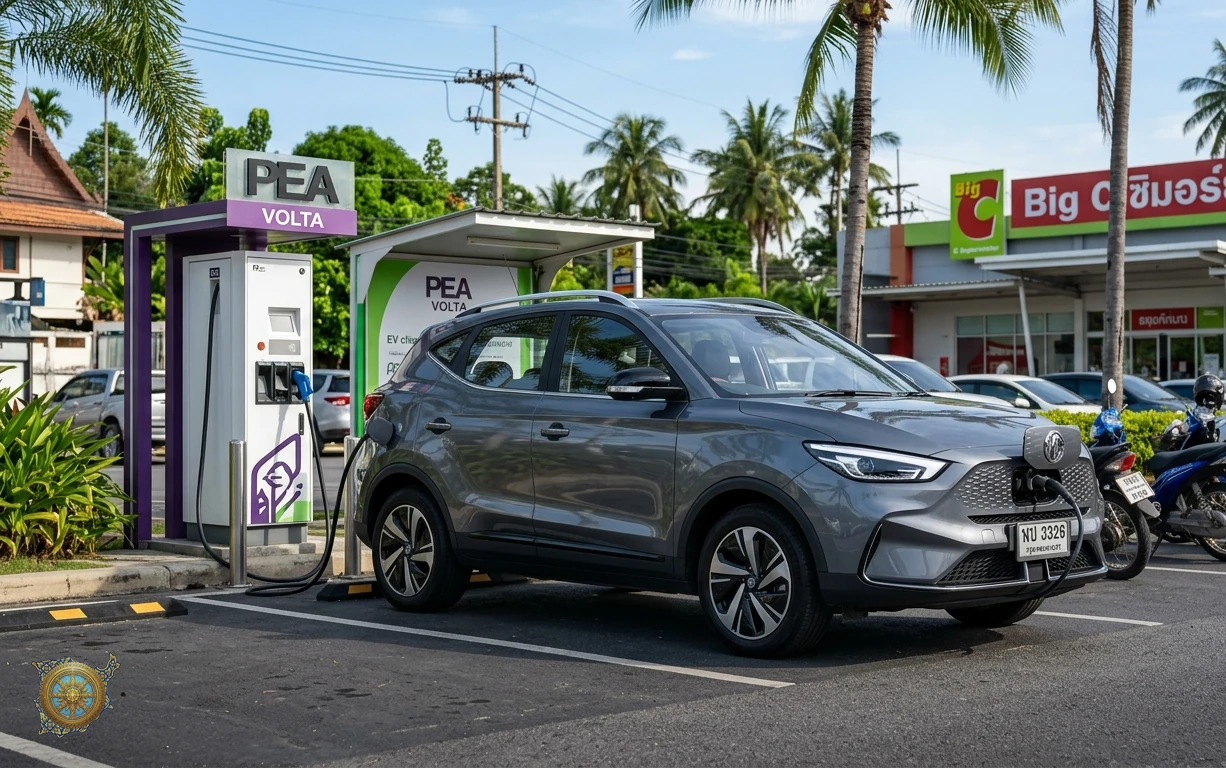
from ฿1,300 / day
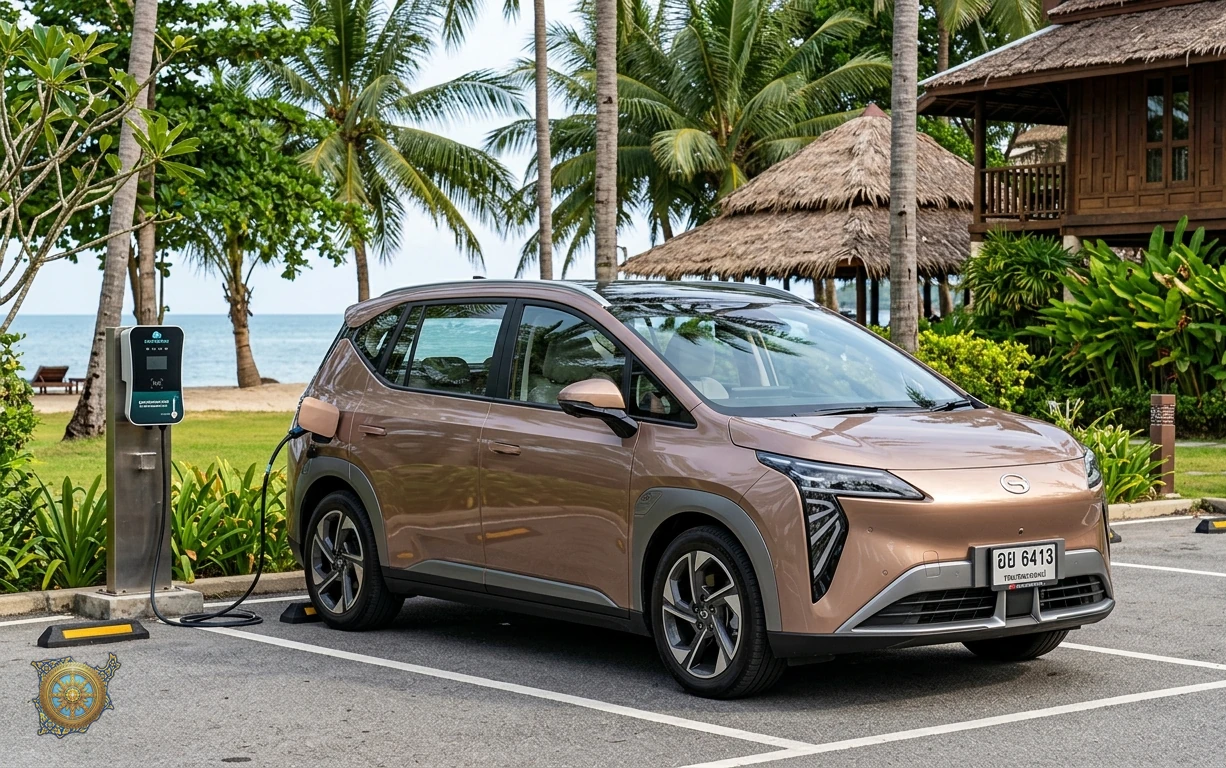
from ฿1,400 / day
The mid-size end of the electric fleet: longer, taller and better loaded than the crossovers, with the biggest boots and the fastest charging of any EV we rent. Rates run from ฿1,600 a day for a Hyundai Ioniq 5 to ฿3,000 for a high-season BYD Sealion 7.
The arithmetic here is unusually favourable. The ring road is 51 km all the way round, and a full day taking in Big Buddha, Fisherman’s Village, the Na Muang waterfalls and the Hin Ta and Hin Yai rocks struggles to pass 90 km. The shortest-range car in our electric fleet manages around 280 km. Range anxiety, the thing that puts most people off renting an EV, is close to irrelevant on an island this size. What matters instead is where you plug in.
Start with people and bags rather than range. The battery sits under the floor, so an electric hatchback carries what a petrol one does: four adults and two large cases. The electric sedans have the biggest boots in the fleet, and the Tesla Model 3 and BYD Seal add a front boot. For a family of four with full airport luggage, the Tesla Model Y and BYD Sealion 7 are the surest choices. What the electric fleet cannot do is seven seats, so a group of six or more needs a petrol SUV or MPV.
Then let the accommodation decide the rest. With a wallbox where you are staying, any car here works and the cheapest is a fine choice; with only a 3-pin socket, or nothing, take a longer-range or faster-charging model. If your villa is up a hill road, take a crossover rather than a hatchback: the clearance matters and the bigger battery absorbs the climb.
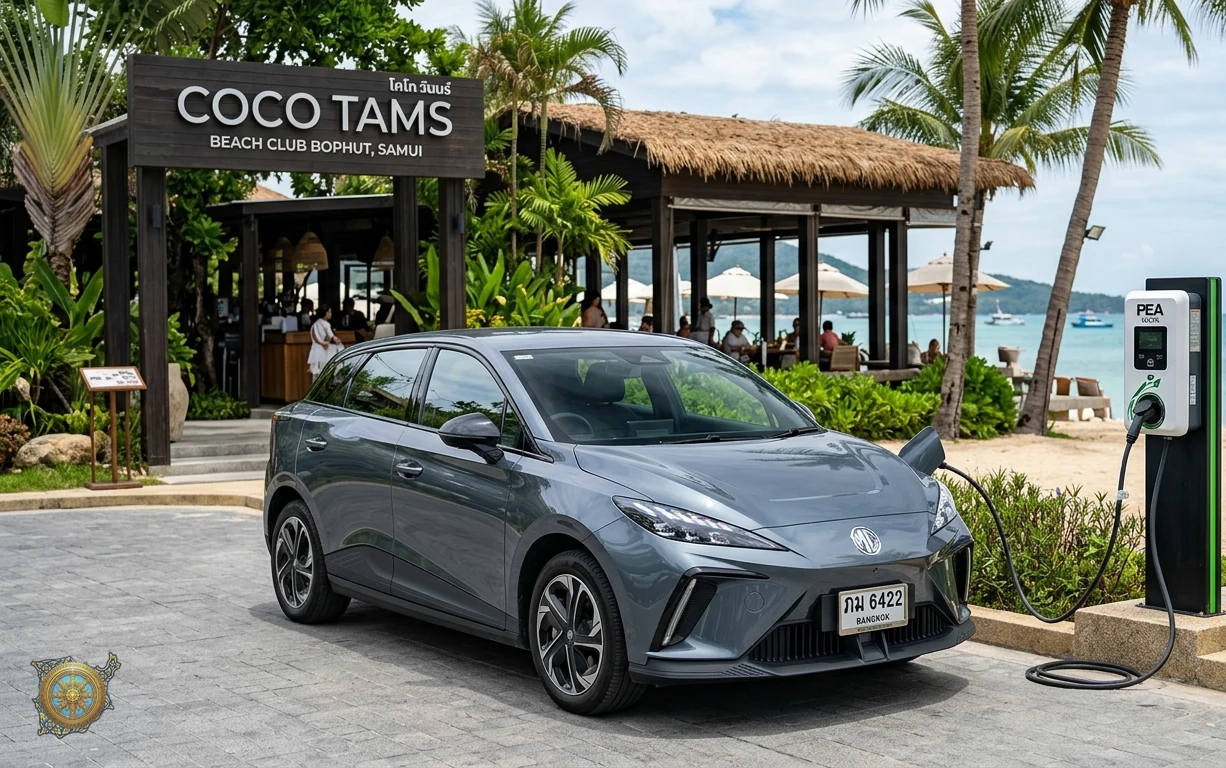
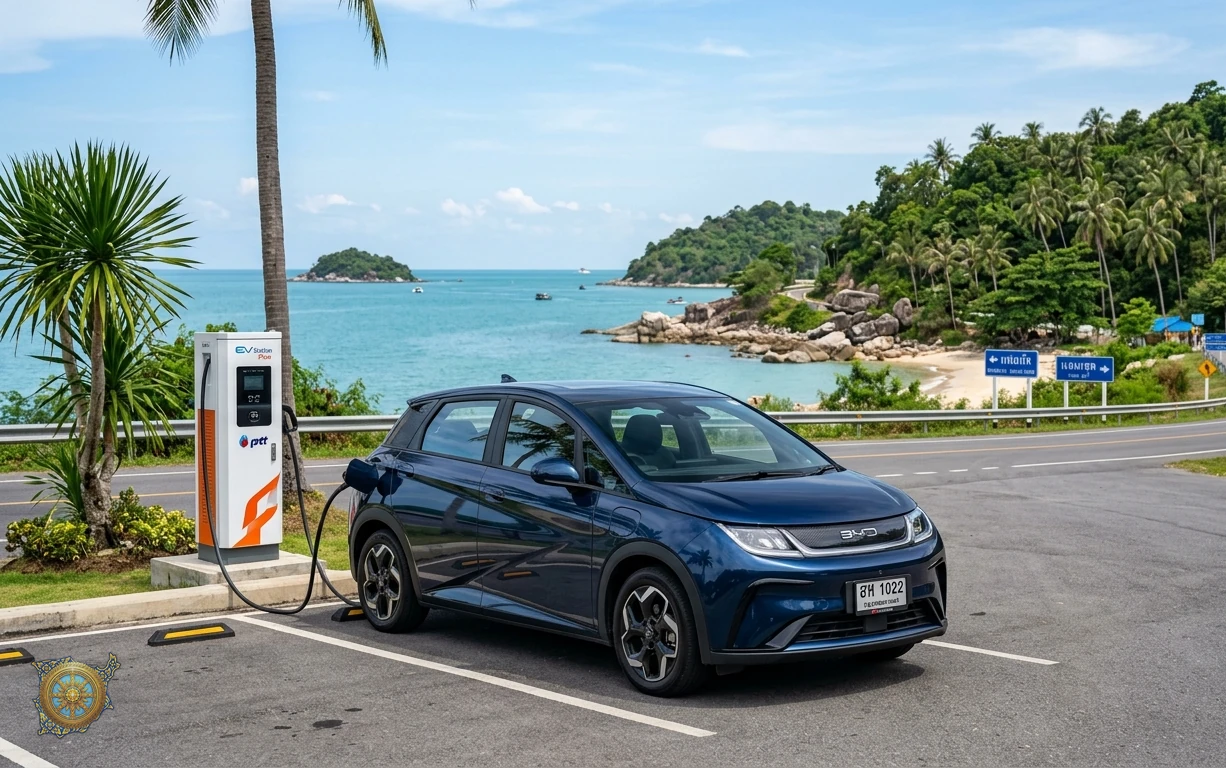
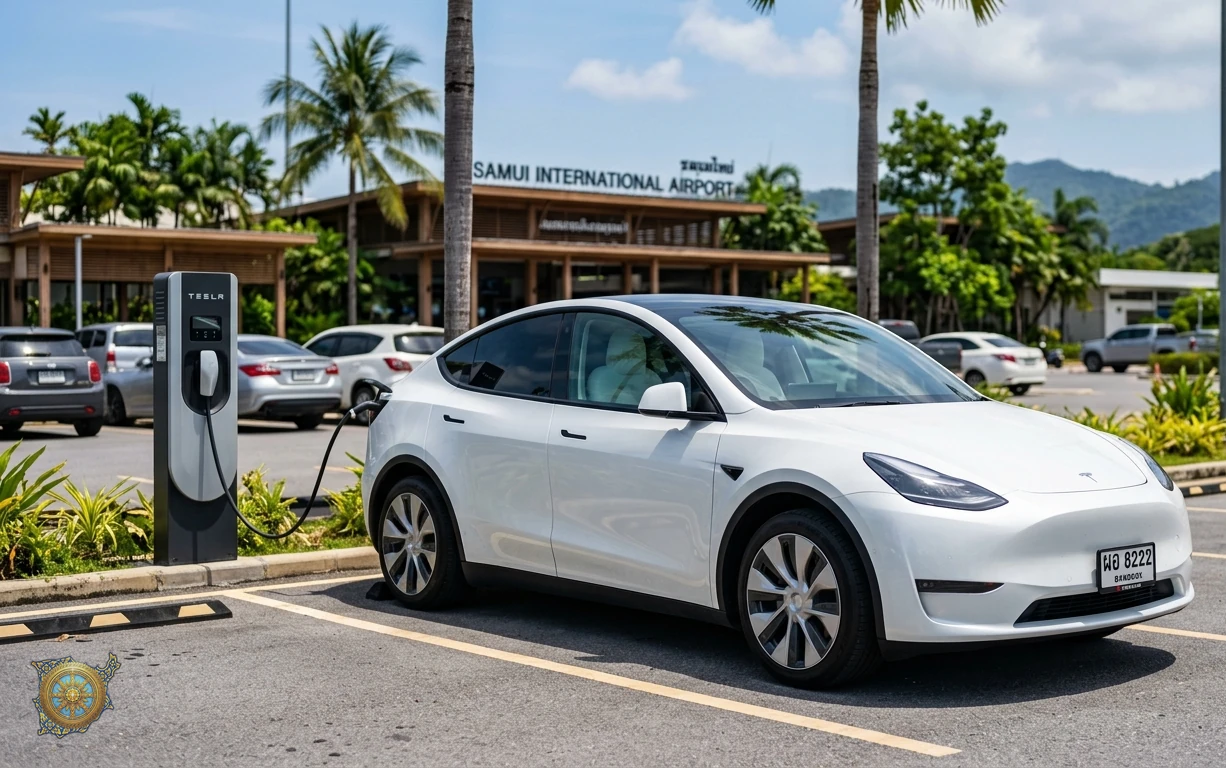
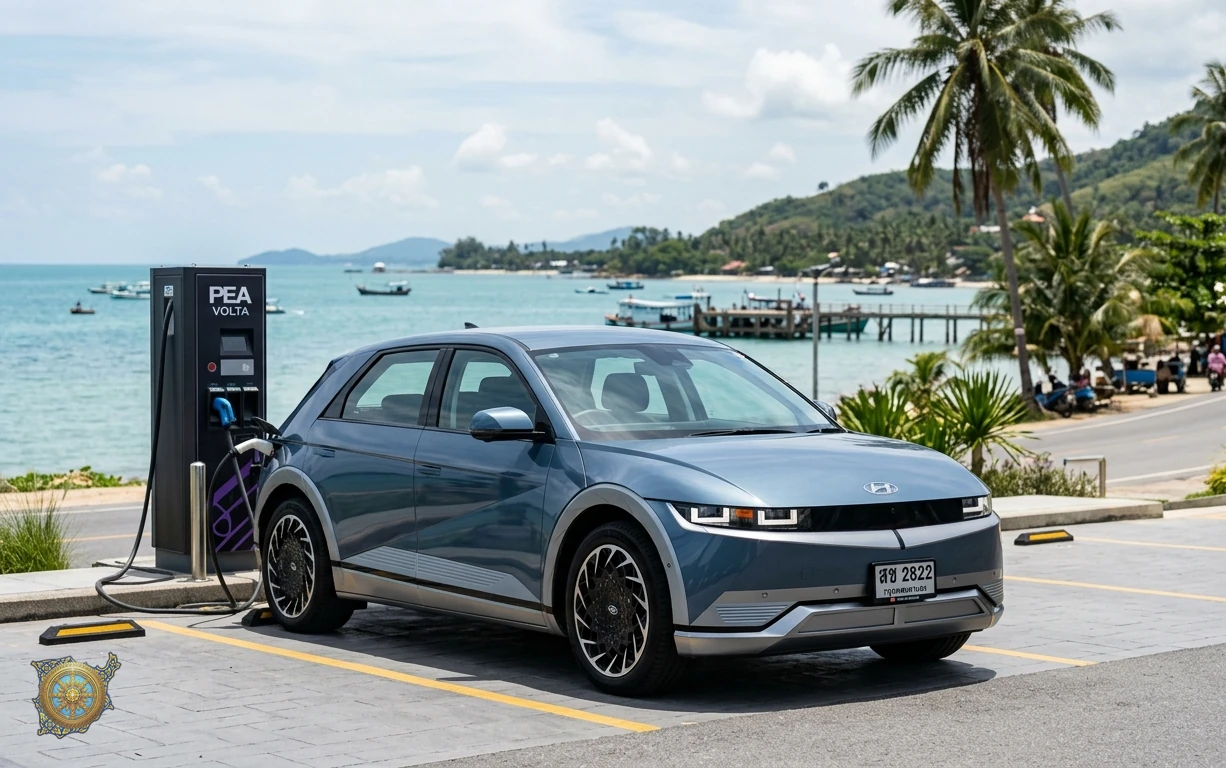
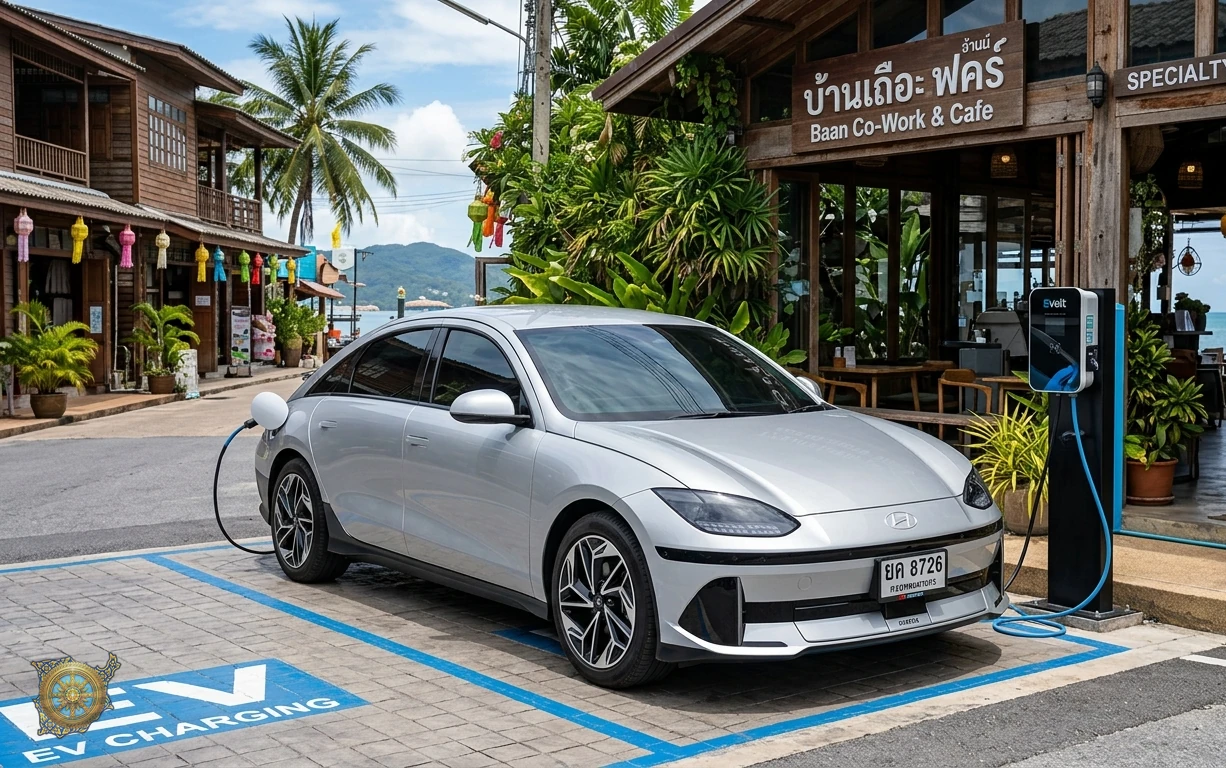
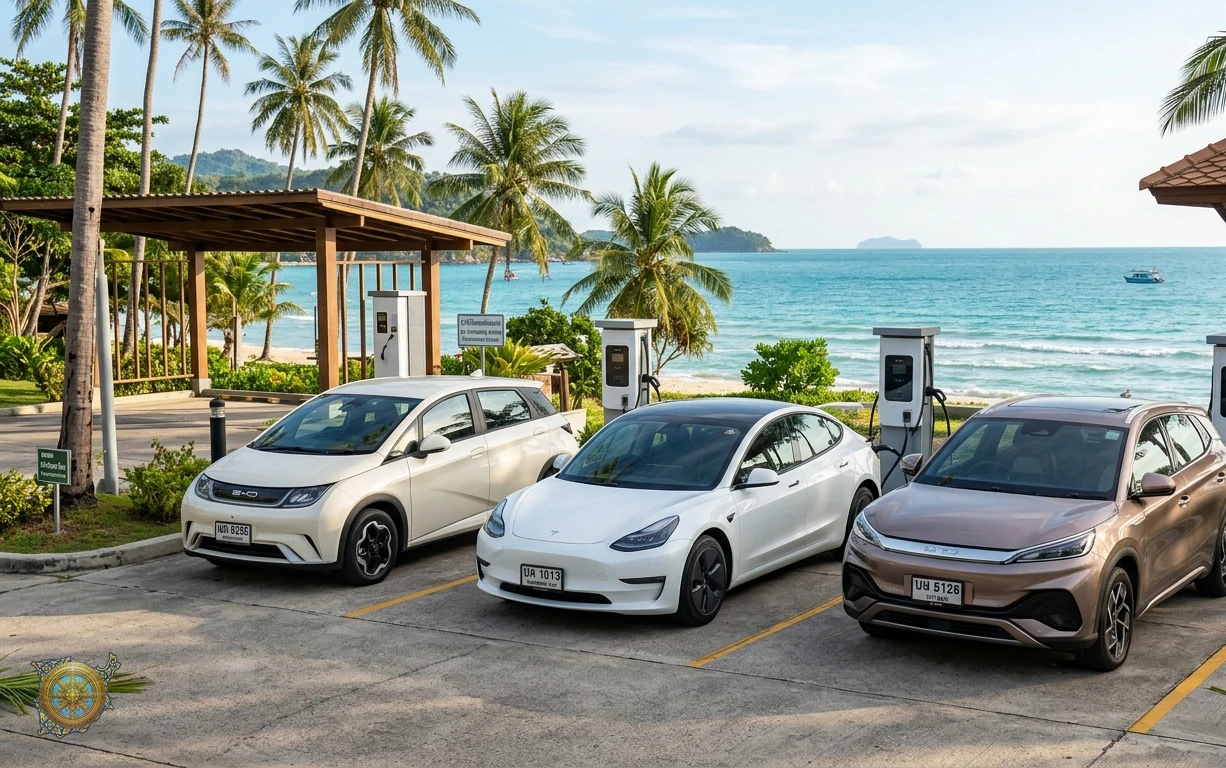
Public charging is real but concentrated. Chargers cluster around Chaweng, the airport and the larger shopping centres, on networks including PEA VOLTA, EA Anywhere and PTT EV Station PluZ, most needing their own app, so download them before you arrive. Coverage in the south and west of the island, and inland, is much thinner.
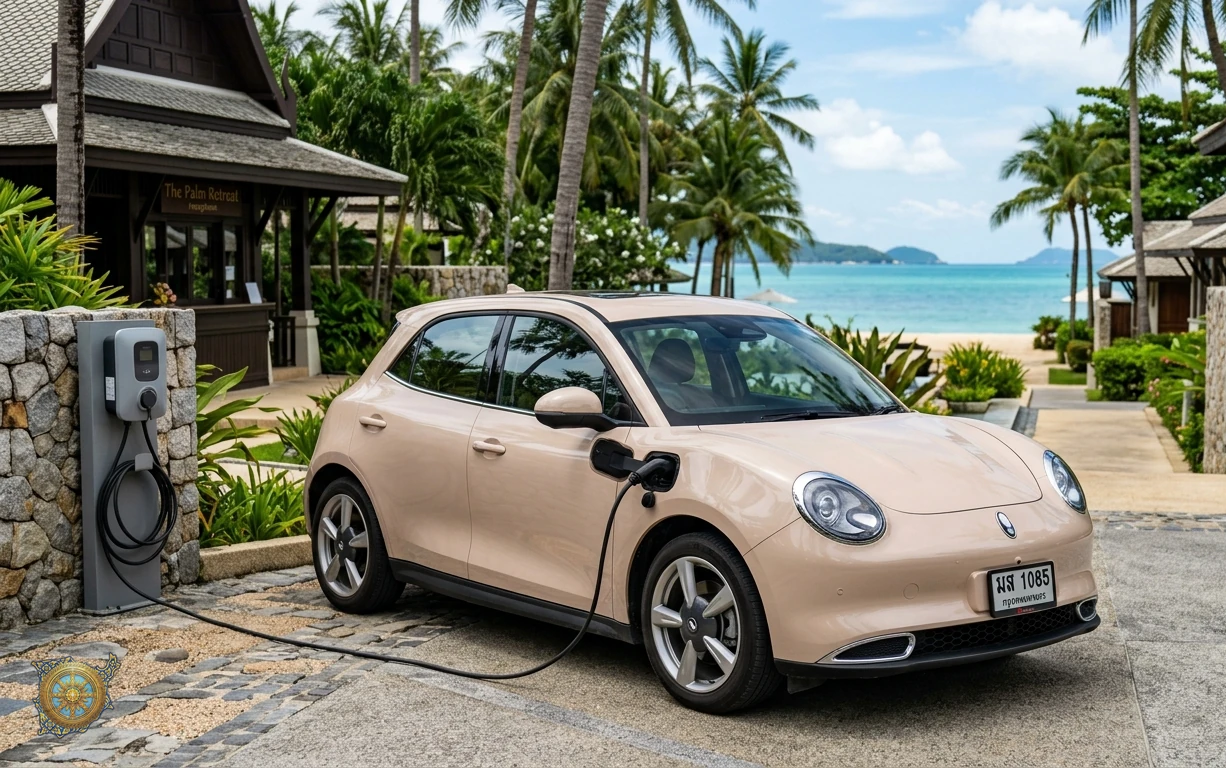
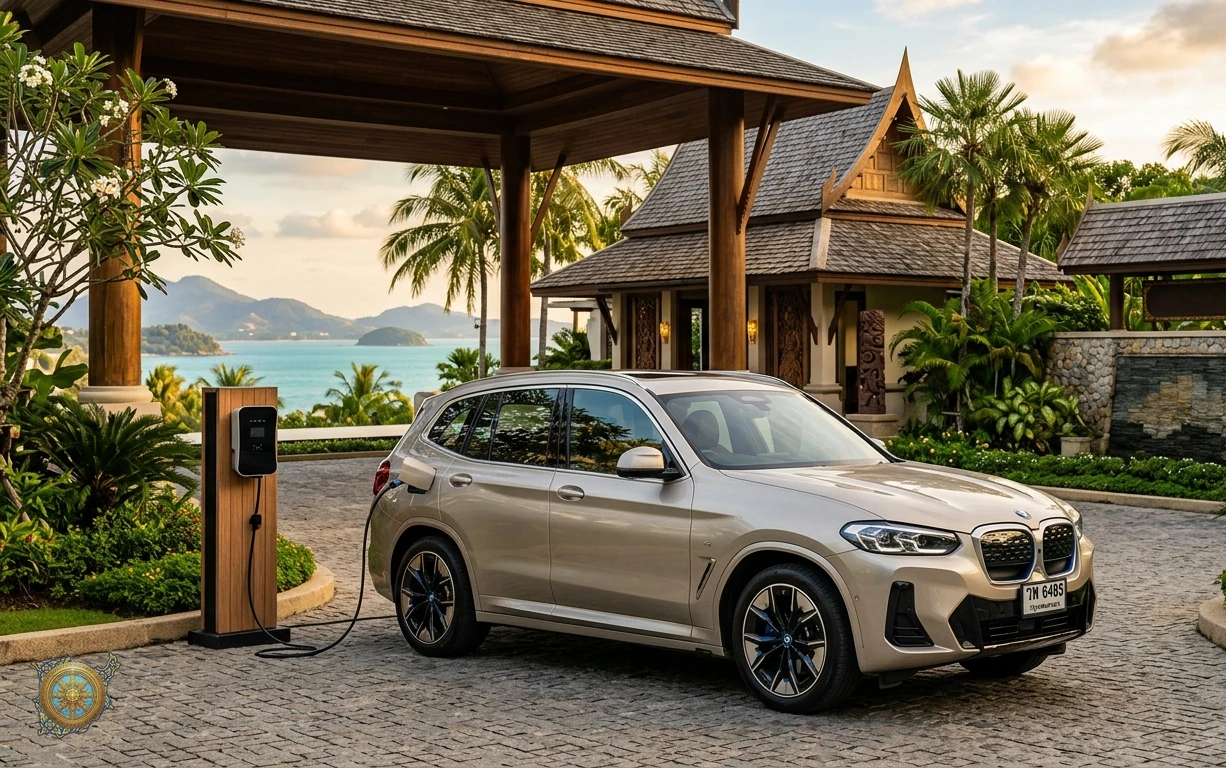
So the most useful thing you can do is ask your hotel or villa one question before booking: do you have EV charging, and if not, may I use a standard outlet overnight? A wallbox means the car is full every morning. A Thai 3-pin outlet adds roughly 10-15 km of range per hour on the cable supplied with the car, so 120-180 km over a night, more than a typical Samui day uses. Neither answer means one DC stop a week, about as long as a coffee. Always ask permission before plugging into a property’s socket.
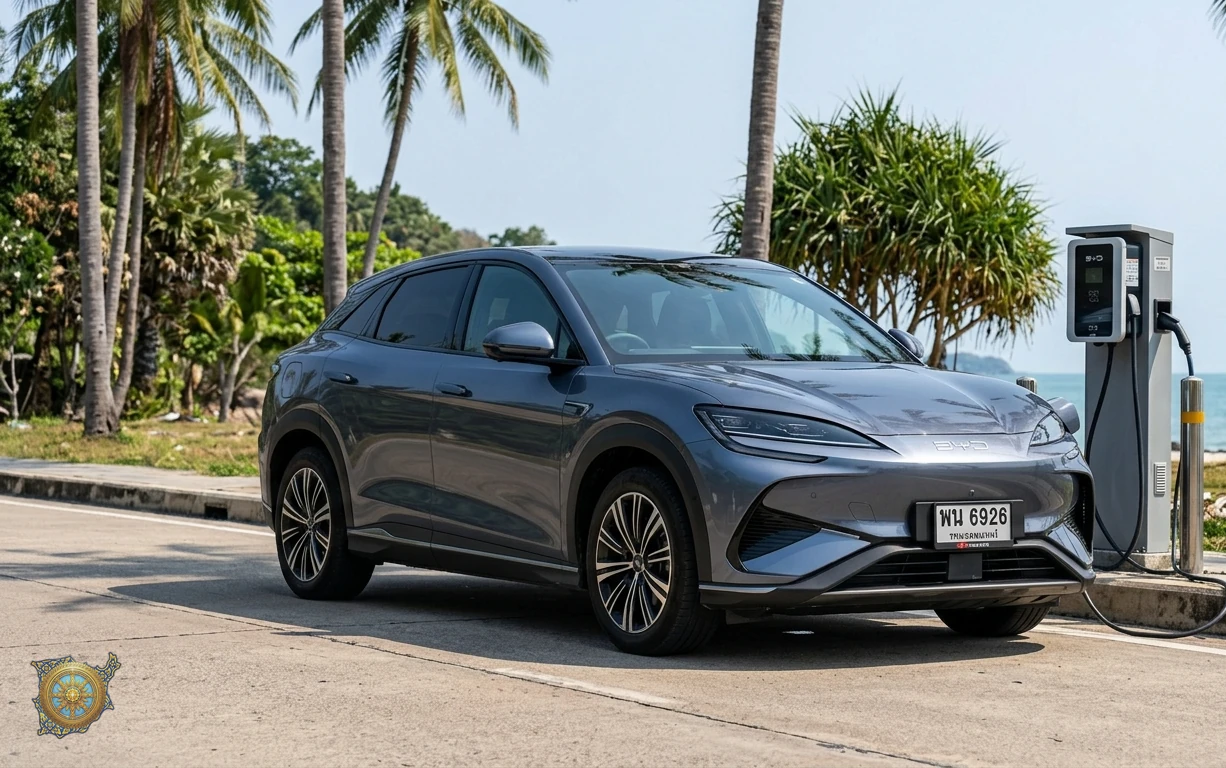
Thailand has standardised on Type 2 for AC and CCS2 for DC, and every car in our electric fleet uses that pair except the Nissan Leaf, which needs the older CHAdeMO for DC: choose it only if you can charge where you are staying. DC speed varies more than range does. The Hyundai Ioniq 5, Ioniq 6 and Kia EV6 run an 800-volt system and go from 10 to 80 per cent in about eighteen minutes, most of the fleet takes 25 to 40, and the GWM Ora Good Cat around fifty. On a mainland trip that is the whole difference.
We quote realistic island figures on every model page rather than test-cycle numbers. Constant air conditioning, frequent climbs and short journeys that never let the car settle all cost range: expect roughly 20-30% below the manufacturer claim if your accommodation is up a hill. Hills cut both ways, though, and regenerative braking recovers a good share on the descent.
Electricity here is cheap relative to fuel, so a week of island driving in an electric hatchback costs a small fraction of the same week in a petrol one, and nothing at all if your accommodation includes charging.
Every electric model page publishes six rate figures, day, week and month in both low and high season, alongside the deposit, the real island range and the charging times. Inside the rate: comprehensive first-class insurance with Collision Damage Waiver, delivery and collection anywhere on the island, unlimited mileage, 24/7 assistance and the AC charging cable. Nothing is added at handover.
The charge policy is the EV version of full-to-full, and deliberately gentler. We deliver at 100% and photograph the state of charge. Bring the car back above 20% and there is nothing to pay; below that we charge the metered cost of the electricity from the receipt and nothing on top.
Every car carries comprehensive first-class commercial insurance covering third-party liability, damage and theft, and that includes the battery and the charging equipment. Your maximum exposure in an at-fault incident is the security deposit stated on the model page. The premium electric models carry the highest deposits in our fleet, which is exactly why the figure is published before you book rather than mentioned at handover. We never hold your passport as collateral.
We deliver anywhere on the island at no charge, with a five-minute EV briefing on the spot: how to start it, how regenerative braking feels, which cable does what, and how to charge at your accommodation and at a public point. At handover we photograph every panel, the interior, the state of charge and the odometer into your digital contract, and collection reverses it. If nothing has changed the deposit is back on your card within three bank days; if something has, you get both sets of photographs and an itemised garage invoice, and we deduct only that.
A month is where the electric arithmetic wins outright. The daily rate is a little above the petrol equivalent and the running cost is a fraction of it, so over thirty days of school runs, market trips and ring-road driving the electric car is usually the cheaper month, decisively so if you can charge where you live.
The Raja and Seatran vehicle ferries carry cars to Don Sak in about ninety minutes, and from there it is roughly two hours to Khao Sok National Park. Tell us at booking so the paperwork covers it, take one of the fast-charging cars, and book the ferry ahead in high season: vehicle space fills before passenger space does.
The requirements are the same as for any car here: your national licence plus an International Driving Permit, obtained in your home country because it cannot be issued in Thailand. Checkpoints on Route 4169 do ask, and driving without one can void your insurance. Minimum driver age is 21 with a year of experience. No endorsement is needed for an electric car, and there is little to learn: no gearbox, immediate response, and lifting off slows the car more firmly than you expect.
Unusually good, because of the geography. The island ring road is 51 km all the way round and the longest single drive you can take is under an hour, so even a modest 280 km EV covers three or four days of heavy sightseeing on one charge. The question is never range - it is whether your accommodation has somewhere to plug in.
Public charging clusters around Chaweng, the airport and the main shopping centres, on networks including PEA VOLTA, EA Anywhere and PTT EV Station PluZ. Many hotels and villas now have a wallbox, and almost all will let you use a 3-pin socket overnight. Confirm with your accommodation before you book - that single fact determines whether EV rental here is effortless or mildly inconvenient.
Less than the brochure figure, and it depends on where you are staying. Expect roughly 20-30% below the official range if your base is up a hill, because climbing consumes charge quickly - though regenerative braking returns a good share of it on the way down. Our model pages quote realistic island figures rather than WLTP or NEDC claims.
Almost all use Type 2 for AC charging and CCS2 for DC fast charging, which is the Thai standard. The one exception in our fleet is the Nissan Leaf, which uses the older CHAdeMO standard for DC - fine if you charge at your accommodation, but worth avoiding if you plan to rely on public fast chargers.
Substantially less. A full charge on a mid-sized EV costs a fraction of the equivalent tank of 95-octane petrol, and if your hotel or villa lets you charge overnight it may cost you nothing at all. Over a monthly rental the saving is one of the strongest arguments for going electric here.
From ฿850 a day in low season for a BYD Dolphin up to ฿3,000 a day for a BYD Sealion 7, with the Tesla Model 3 and Model Y in the middle of the range. Every model page publishes day, week and month rates for both seasons alongside the deposit. Insurance, delivery, collection, unlimited mileage and 24/7 support are inside that figure, and the charging cable comes with the car.
No. We deliver every EV at 100% and photograph the state of charge and the odometer. Bring it back above 20% and there is nothing to pay. Below that, we charge the metered cost of the electricity from the charging receipt and nothing on top - there is no refuelling-style service fee, and no penalty for arriving with a low battery after a long final day.
A card deposit stated on every model page before you book, sized to the vehicle - the premium electric models carry the highest in our fleet. We never hold your passport. The deposit covers the insurance excess and is refunded to the same card within three bank days of collection. If there is genuine damage you get the handover photographs, the collection photographs and an itemised garage invoice before anything is deducted.
Not for ordinary island use - sand, dust and damp towels are expected, and the standard clean between rentals is our cost. The only exception is specialist cleaning after smoke, vomit, spilled liquid or heavy pet hair, and you see the invoice and the amount before anything comes out of the deposit.
For four people, comfortably - the battery sits under the floor, so an electric hatchback carries what a petrol one does and the electric sedans have the biggest boots in the fleet. For a family of four with full airport luggage, the Tesla Model Y and BYD Sealion 7 are the surest choices. What the electric fleet does not have is a third row: a group of six or seven needs a petrol SUV or MPV. Every model page lists seats, doors and the number of bags the boot takes.
Yes - infant, child and booster seats fitted to the rear ISOFIX anchors before delivery, on every electric model we rent. Tell us ages and weights at booking. EVs suit children rather well here: the cabin is quiet, there is no exhaust smell in traffic, and the air conditioning can be left running while the car is parked without the engine noise or the fuel burn.
Call our 24/7 support line and we will get you to the nearest working charger or bring a charge to you. In practice it very rarely comes up: the island is small, we deliver every car fully charged, and the range on even our cheapest EV covers several days of normal driving.
Roadside assistance is included and runs 24 hours. For an EV that also means we deal with charging faults and cable problems, not only mechanical ones, and if the car cannot be moved we recover it and bring a replacement of the same category or better. In an accident, people first: 1669 for an ambulance, 191 for the police, then photograph the scene and call us. We handle the insurer and translate where needed, and your liability stays capped at the deposit.
Yes. Tell us at booking so the paperwork covers it. For mainland trips we would steer you towards the longer-range, faster-charging cars - the Hyundai Ioniq 5, Kia EV6 or Ioniq 6 add 200 km or more in under twenty minutes, which makes Khao Sok or Krabi as straightforward as it would be in a petrol car.
Very little. There is no gearbox and no engine noise, the accelerator response is immediate, and lifting off slows the car more firmly than you may expect because of regenerative braking. We walk you through the specifics of your car at handover, including how to charge it, and it takes about five minutes.
This is where it makes the most sense. The daily rate on an electric car is slightly higher than the petrol equivalent, and the running cost is a fraction of it - so over thirty days of school runs, market trips and ring-road driving the electric car is usually the cheaper month, and clearly so if you can charge where you live. Monthly rates are published on every model page, and servicing, insurance and roadside assistance stay with us.
If your villa has no charging, or you want the widest choice of 7-seaters and pickups, our petrol and diesel range is larger and starts lower.
Car Rental Koh Samui